2026 is a make-or-break moment for the travel industry. OTAs are working on sharply reduced traditional (5-10%) commissions, and customer acquisition costs are also increasing. Meanwhile, travel agencies and online travel agencies are losing control over their most valuable assets: customer data. Without the customer relationship, businesses rent their entire operation from OTA platforms.
Travel CRM is a software that brings customer’s details, automate booking workflows and allows for personalized communication under the same hood for travel companies. Unlike generic contact management software, it’s designed for the unique needs of travel agencies, tour operators, and destination management companies.
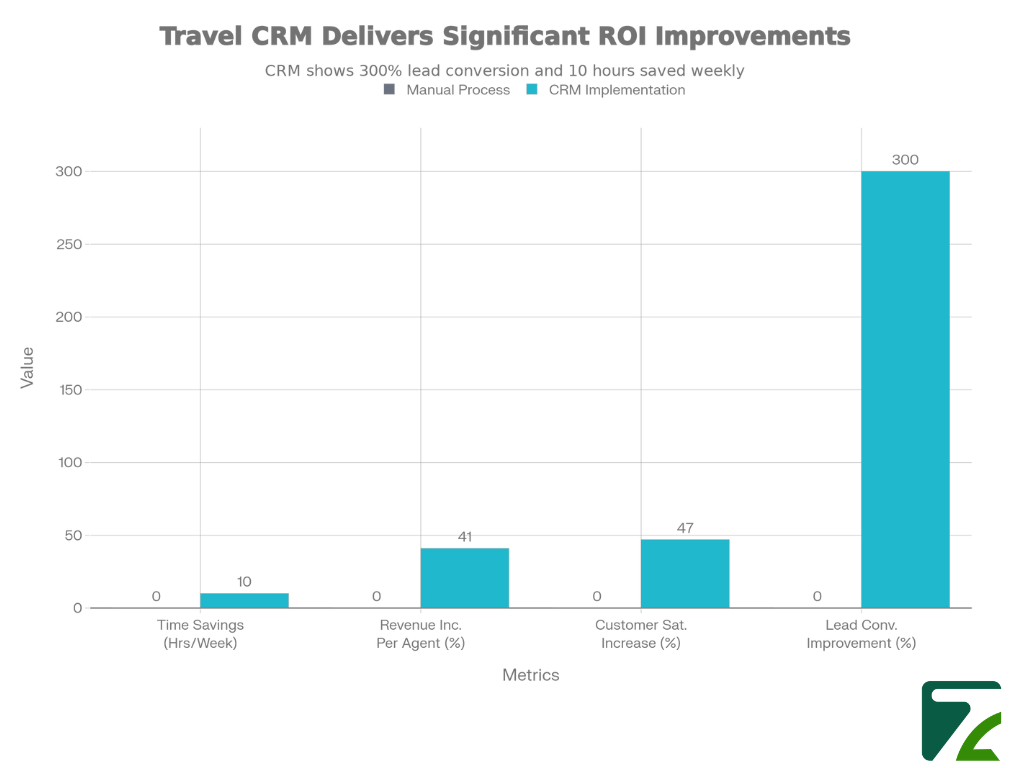
And timing couldn’t be more crucial. In 2025, 64% of organizations consider CRM business critical, not just helpful. The cloud-based CRM market is increasing at 16.1% per year and will amount to $80 billion in 2025. For travel agencies in particular, the numbers do not lie: Travel CRM users see 47% increase in customer satisfaction and a 41% lift to revenue per consultant.
The travel industry’s seasonal fluctuations, intricate supplier networks, and multi-leg booking processes present challenges which can’t be solved by generic business software. That alone is the reason why travel-specific CRM systems have become survival and growth tools.
A travel CRM is a specialized management system created for unique workflows in the business specific to the travel industry. Here’s what a full travel CRM would include:
Centralized customer database houses every interaction, preference and booking history in one location. This encompasses contact details, travel history and preferences, communication records, and special needs. When a customer calls after six months since their last trip, you can immediately see their entire history.
Booking management deals with the intricacies of travel operations like multi-vendor coordination, itinerary generation for complex journeys, monitoring payments to multiple vendors in a single transaction, and confirmation status management. It’s made for the reality that a single “booking” likely involves hotels, flights, activities and ground transportation.
Automation engine automatically leverages reminder workflows, payment follow-ups, reconfirmation sequences and post-trip feedback requests without any manual interference so that your team can spend more time on high-value customer interactions.
Communication hub consolidates email, SMS, and WhatsApp messaging into one place for all customer communication to happen from one platform. Your team has a full conversation history no matter which channel the customer uses.
The Analytics dashboard allows you to report in real time on booking trends, patterns of revenue, demand by season, agent performance and customer lifetime value. You receive real-time responses to questions like “Which destinations are trending?” and “Which customers are likely to book with us again?”
Mobile availability offers travel agents full access via smartphones and tablets to manage bookings, communicate with customers, and check data whenever, wherever.
Generic CRM (Salesforce) is for B2B sales (contacts → leads → deals). Travel CRM manages complicated journey booking → payment → confirmation → reconfirmation→ post-trip.
Travel-specific issues that generalist CRM systems cannot address seasonal patterns, multiple suppliers per booking, multi-destination itineraries and how the risk associated with no-shows and supplier payment reconciliation.20% of travel companies had to transfer from a generic CRM solution to one that was specifically dedicated to travel.
Spreadsheet headaches: manual data entries, version control nightmare, lost information, time-consuming finding and searching the right one, no automation, impossible change tracking.
CRM software: automation, up-to-date details of customers stored in a single place, workflow compliance, and audit trails. Travel agencies are saving 10+ hours a week moving from spreadsheets to CRM, and that’s 520 hours a year.
If you’re an OTA, your business model is living on the edge. Supplier commission rates are decreasing, but marketing costs are on the increase. The math can be harsh: Paying $50 per head to acquire a customer when you earn only $30 in commission on their first booking makes you underwater unless they come back.
The problem? OTA platforms like Booking. com, Expedia and Airbnb own customer relationships. You can’t communicate directly with customers who book through these platforms. You can’t market to them. You can’t exactly nudge them to book direct next time.
This is where travel CRM comes as a savior for OTA’s. A robust CRM system should collect customer information from your own booking channels, create e-mail and SMS lists for direct marketing, track customer preferences and booking trends, pinpoint your best repeat customers and automate re-engagement campaigns.
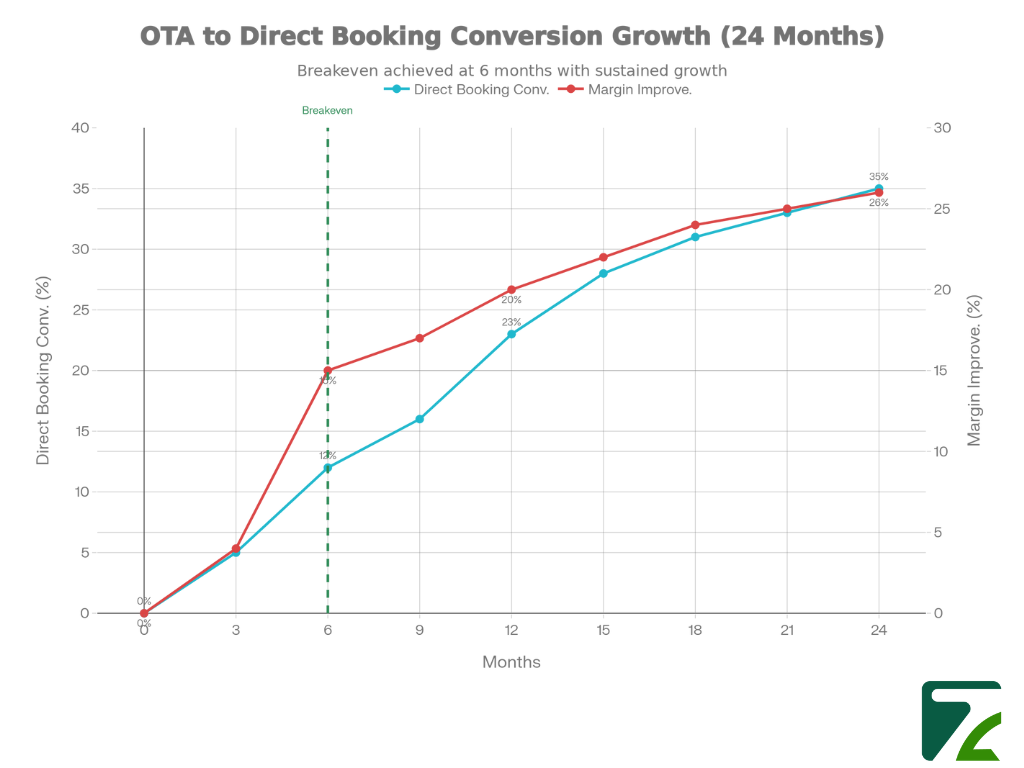
It’s a no brainer ROI: Direct bookings provide 3-5 times a margin than OTA platform booking. There is a 23–35% increase on direct bookings booked in travel agencies that use CRM, which is directly to the bottom of profitability and also makes your business more sustainable.
Automatic reconfirmation decreases no-shows 15-20% via SMS and email series at 7 days, 2 days, and 1 day before travel. Supplier management: This feature centralizes contacts, rates, and monitoring of performance. Direct booking incentives leverage customer desires to book directly at a better price than can be found on any OTA.
At the core of every travel CRM are detailed customer profiles. Today’s systems store travel preferences (from beaches vs. city, luxury vs. Budget) past booking history with specific dates and destinations special requests, dietary restrictions and allergies, accessibility needs, room and seat preferences (for air or rail) the entire communication history across all channels.
Smart segmentation allows you to segment your customers based on their travel destination preferences, travel style (adventure,luxury, family orientated or solo), booking frequency (first-time customers vs. repeat customers). Average spend per booking and the time of year they typically book. This enables targeted marketing that really works.
Preference tracking logs the kind of information that enables personalization: such as, those are favorite hotels and airlines; type of seat or room one prefers, other meal requirements; dates of celebration like anniversaries and birthdays; and family composition for appropriate trip planning.
Why this matters: 80% of consumers are more likely to buy when brands offer personalized experiences. In travel, that personalization is the difference between a generic email blast getting deleted and an offer to book exactly the sort of trip your customer loves.
Create advanced multi-leg itineraries, monitor booking status (enquiry → quote → confirmed → paid → completed), automate invoicing, set up payment plans, see live supplier availability and avoid double booking with calendar sync.
Automated payment reminders, pre-trip information, welcome emails series, reconfirmation flows, flight change alerts by SMS, lead assignment and follow-up triggers. 77% of sales teams say CRM removes the need for manual data entry related to administrative tasks.
Monitor trending destinations, package performance, seasonal trends, revenue per booking, agent conversion rates, customer lifetime value, repeat bookings, and preferred communication channels.
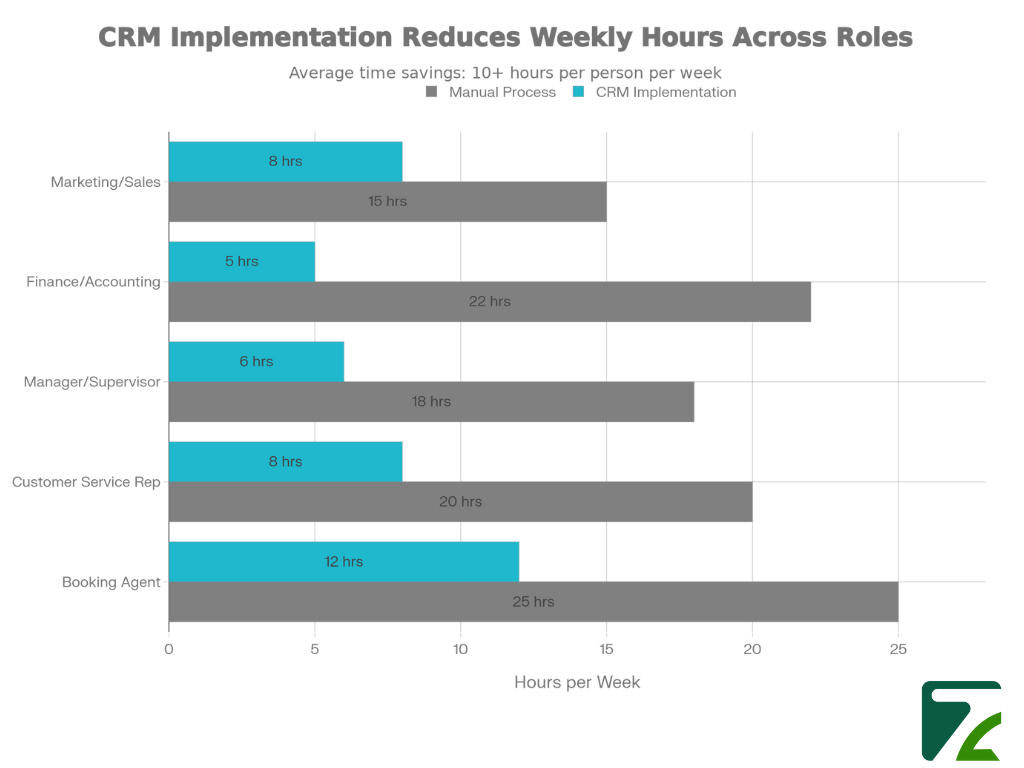
Save 10+ hours per week on admin task and get 30-40% more bookings with the same headcount. Eliminate booking errors and missed follow-ups. The ability to access a customer’s history instantly translates to responding to inquiries in minutes, not hours. Having personalized conversations that bring you referrals and more repeat business.
When it comes to reservations made by customers on OTA platforms, they own the relationship. Travel CRM levels the playing field: you “own” customer data from direct bookings, can market directly to guests with emails/SMS, monitor repeat visits during loyalty campaigns and cut expensive OTA commissions (15-25%).
91% of companies with 11 or more employees now use CRM. The ones doing well in 2026 use travel specific solutions.
Weeks 1-2: Establish CRM objectives, audit existing data sources, map booking workflow, select vendor, assign internal champion.
Weeks 3–4: Clean your customer data, import contacts and booking history, set up segments and user permissions.
Weeks 5-6: Integrate into email/SMS tools, connect payment processing, establish automated workflows, profile booking templates, start building reporting dashboards.
Week 7-8: Training for all users, document the process, parallel operations (to validate), collect feedback, full go live.
Post-Implementation: Visibility into usage, feedback gathering, workflow optimization, review analytics and add on new functionality.
The majority of travel agencies go live in 8-12 weeks. Cloud-based solutions deploy faster than custom development.
Each direct web booking arrives in your CRM along with full customer details. Collect emails even at inquiry level if clients does not book immediately. After OTA bookings, encourage customers to create an account on your website so they can manage their trip and get them into your CRM.
Keep track of booking anniversaries. If a customer took summer vacation last July, automatically send out personalized offers in May. Deliver preference-based destination marketing that they really do want. Entice exclusive direct bookings: rewards points, rooms upgrade, better rates.
If you’re paying 20% commissions on $500,000 annual bookings, that amounts to $100,000 in commissions. Shifting half to direct channels saves $50,000 annually.
AI-Powered Automation: Chatbots for real-time replies, predictive analytics for no-show risk, dynamic pricing recommendations, and automatic creation of itinerary.
Mobile-First Design: Full smartphone functionality, offline access, mobile payment processing.
Integration Ecosystems: Integrate with accounting tools, payment gateways, email marketing solutions and booking systems.
Cloud Adoption: Cloud CRM achieved 56.1% market share in 2025. Other advantages are that you can access them from anywhere, they will update themselves automatically, and the cost of set-up is smaller as well.
Key Stats: 64% of businesses rate CRM as business-critical (up from 50% in 2023), CRM market growing at a rate of 12.6% and hit $80B by 2025, and 91% use CRM companies with more than 11 employees.
Travel CRM is not becoming anymore a choice is a necessity for travel agencies and OTAs to compete in 2026. The companies capturing a greater share of the market are those that are investing in relationships with costumers and streamlining workflows implementing CRM technology to establish direct booking channels.
The competitive landscape has fundamentally changed. Customers demand tailored service, immediate answers, and smooth booking process. OTA platforms are holding more and more customer data, slashing commissions at the same time. In an evolving digital world, manual processes and spreadsheet solutions just can’t meet these market requirements.
The issue is not whether you to activate travel CRM, but rather what’s the best approach for your specific business. If you are an OTA seeking to decrease the dependence on commissions and gain back customer data, you will want CRM systems with a good level of automation, along with high-levels of customer data capture and direct booking conversion. If you’re a traditional travel agency, look for systems with strong itinerary management, supplier concierge, and customer service workflows.
There’s concrete ROI: 47% increase in customer satisfaction, 41% increase in revenue per agent, more than 10 hours of savings per week on administrative tasks, and a 23-35% uplift towards driving direct bookings. These aren’t hypothetical figures or best-case scenarios , these are the results that travel businesses actually experience when they implement and adopt CRM effectively.
First of all, identify the challenges you currently have operationally and write down some measurable goals that your CRM investment should help you achieve and finally choose to implement a travel specific solution designed for your industry’s own needs. The businesses that beat their competitors to the punch here will win big while others are left trying to battle with outdated manual processes and lost customer data.
Generic CRM manages sales pipelines (leads → deals). Travel CRM manages complex booking journeys with multi-supplier coordination, itinerary management, and post-booking automation.
Typical implementation: 8-12 weeks (planning, data migration, integration, training, testing). Cloud-based solutions deploy faster.
Most businesses break even in 6-8 months through efficiency gains. Full ROI of 245%+ achieved within 18-24 months.
CRM doesn't directly integrate with OTA platforms (closed systems), but captures customer data from direct bookings and enables re-engagement through direct channel automation.
Cloud-based is standard (56.1% market share, growing). Benefits: flexibility, automatic updates, mobile access, disaster recovery.

Travel Automation Expert