The travel business is never going to be the same again. Static, fixed packages sold by OTAs are being replaced by competitors providing on-demand personalized and packaged fair, bundled deals that travelers can tailor to their own preferences. For travel agencies looking for growth that comes intuitively, knowing how to offer packaged travel arrangements isn’t just an option it’s a must.
This guide analyzes why real-time package creation is essential to OTA operations and how it can provide measurable ROI, providing agencies with a straightforward path for integrating city cruise excursion products and asset availability so they are able to drive new revenue through the distribution of local tour and shore excursions.
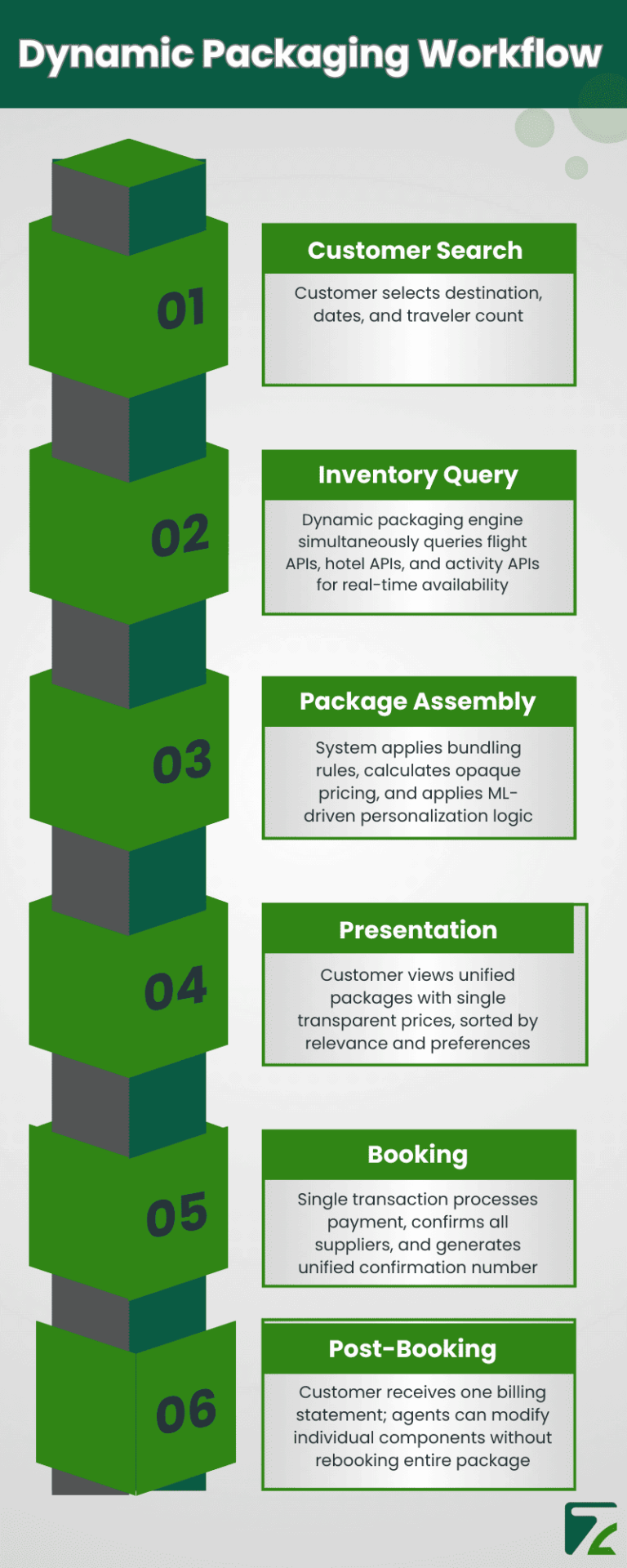
With conventional tour packages; travelers were forced into rigid itineraries. Today, things are fundamentally different: the various parts of a trip flight, hotel rooms, car rentals and things to do are brought together on demand through real-time offerings from suppliers and based on customer preferences before being offered as one single bundle and priced transparently.
The revenue impact is substantial. Hotels that offer package deals fetch about 30% more on ADR than standalone bookings, according to research. Buyers of packages also book an average of one month earlier, and cancellation rates are significantly lower occurrence r standalone bookings experience 2.6 times more cancellations than bundled reservations
The savings are even more dramatic for international package bookings. ADR premiums hover around 30%, booking windows stretch to nearly two months in advance, and cancellations are four times fewer than standalone bookings. Length Of Stay also increases dramatically for the passengers in bundles.
"What may be even more compelling is that these numbers are even higher when we look specifically at international package bookings."
- Melissa Maher, SVP of Marketing and Innovation, Expedia Group
A global leader in the OTA, based in more than 75 countries, had severe limitations of their current system. Their solution was one-size-fits-all wherein their product could only be sold as a fixed package, with no options to tweak elements of the offering: flights, accommodations and ground services. What’s more, the booking tools showed travelers multiple (inaccurate and confusing) line-item entries on their credit card statements, while conflicting pricing became apparent as inventory changed in real time.
The OTA teamed up with IBS Software to develop a sophisticated packaging platform, incorporating the following functionalities:
This example illustrates how implementing advanced dynamic packaging technology translates theoretical value into clear, measurable results
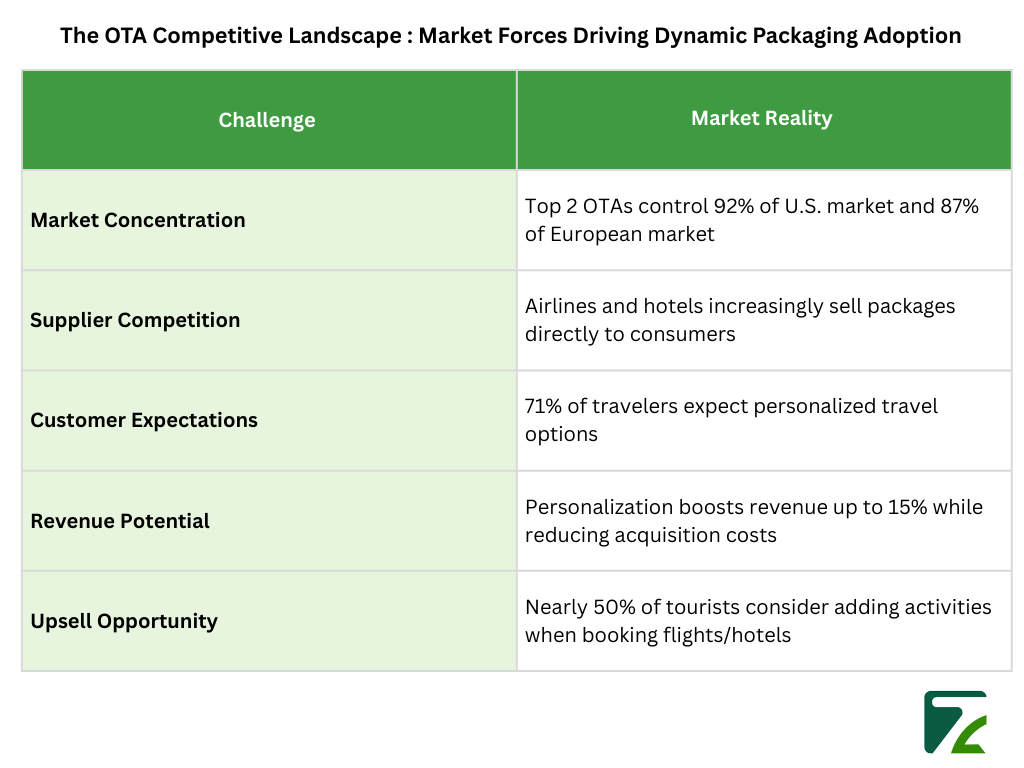
These statistics reveal a fundamental market shift. OTAs that fail to offer personalized bundled experiences lose customers to competitors, including their own suppliers who do.
In this competitive environment, dynamic packaging is no longer the icing on the cake its core infrastructure. The agencies using this follow-up system report a business growth rate of 15-20% and also see customer lifetime value improve drastically. The technology is a means to distinguish commoditized products while also imposing costs of switching achieved through better customer treatment
Implementing bundled travel solutions requires systematic planning. Below is a realistic timeline based on industry best practices:
Overall timeline for implementation: 16-20 weeks for Initial deployment
This timeframe is consistent with industry trends where pilots programs tend to run 8-12 weeks before a full rollout within 6-12 months, depending on operational scale.
A functional packaging engine comprises three integrated layer:
The foundation of any packaging engine is the inventory and supplier integration layer that needs to aggregate search results across multiple supplier APIs, integrate real-time pricing feeds from a GDS and wholesaler and direct contracts, as well as normalize differing data formats for items such as Amadeus, Sabre, Travelport, direct hotel contracts, bed bank APIs, and activity provider platforms.
The core of a dynamic packaging system is the engine that assembles travel products into complete packages by applying build rules and parameters (defining package types, payment schedules, and pricing logic), running opaque pricing to combine component costs with markups into a single displayed price, and using a personalization engine powered by customer data and machine learning to recommend the most relevant package combinations.
The back-end business logic that supports dynamic packaging includes the ability to manage inventory and availability tracking, run booking and confirmation workflows, integrate with a payment gateway, provide multi-language and even multi-currency capabilities (depending on your target markets), deliver revenue management/yield optimization analytics metrics and reporting/BI a key function for providers of high-volume travel packages relying on real-time data flows as a necessary component since the biggest obstacle to success in dynamic packaging is inconsistent data formats or slow exchange rates.
Travel agencies implementing sophisticated bundling capabilities can expect the following performance improvements based on industry benchmarks:
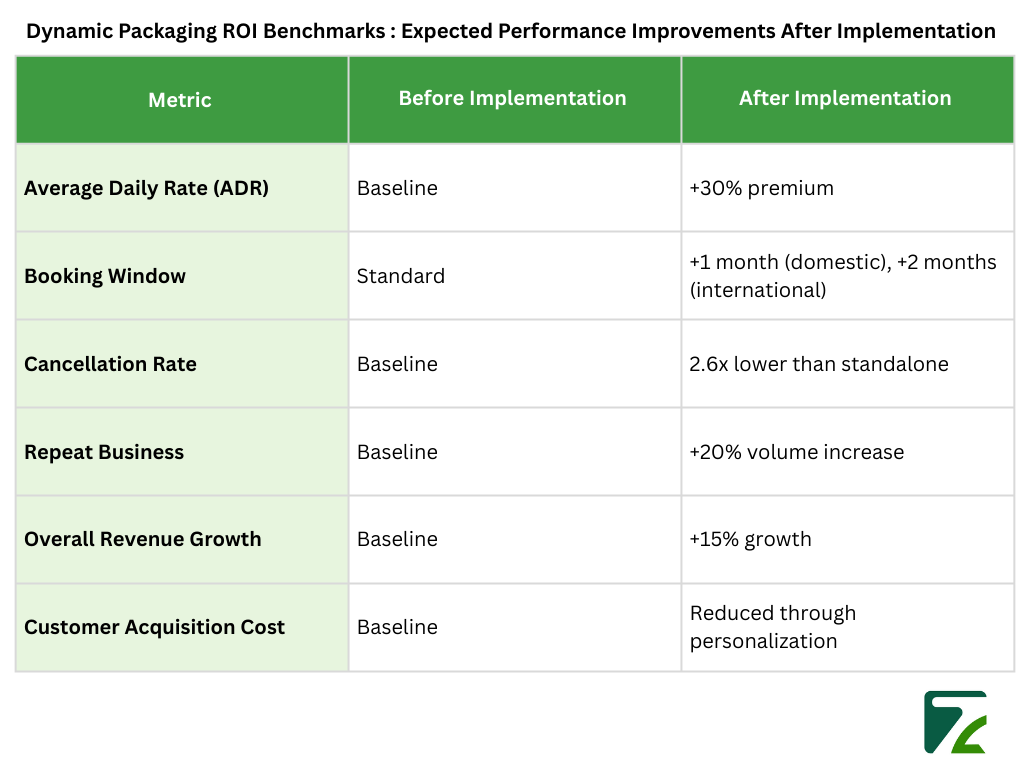
These benchmarks provide realistic targets for agencies building business cases for dynamic packaging technology investment.
Travel agencies struggle with specific operational challenges that bundled solutions directly address:
Hotels and flight prices fluctuate constantly. Outdated rates lead to complaints from customers. As Traditional tools show old rates, Customers complain when sent a new quote final price.
Solution: Reduce discrepancies by integrating with machine-learning-driven pricing via real-time API. Regarding OTA case study, OTA had seen repeat bookings levels rise, thanks to the ML tools reducing pricing gaps in its dynamic packaging system.
When you booked a flight-hotel-car package, canonically the elements of those packages each had to be confirmed separately by the provider, which added coordination overhead and associated risk of error.
Solution: Integration of a single booking and boarding process with unified confirmation and billing via dynamic packaging engines. Travelers will perform a single transaction, and the packaging engine negotiates with suppliers automatically
Travelers often need to switch hotels or alter dates after they’ve made a reservation. Traditional packages require complete rebooking.
Solution: Agent servicing functionality enables call center agents to tailor parts of a package booking without having to reconstruct the entire booking through dynamic packaging interfaces
Hotels with rooms unsold and airlines with seats sitting empty represent lost revenue. Such inventory gets stranded by the traditional distribution.
Solution: Package bundling enables OTAs to mix distressed inventory with shiners, and this increases supply partner margins via dynamic packaging. This ‘final’ package price is opaque, therefore genuine component discounts are ‘fraudsters’ being practiced against the consumers, and consumers have no idea about
The strategic value of personalized packaging is one that industry leaders constantly stress:
“OTAs led the travel industry’s digital transformation, bringing more choice, value and convenience to travelers. But in an increasingly competitive market, how can OTAs differentiate themselves while trying to reach many of the same cost-sensitive travelers with generally similar offerings?Bundled packaging is one of the things that helps OTAs gain competitive advantage.”
— IBS Software Industry Analysis
Here are several proven implementations showcasing how data-driven approaches are transforming travel operations:
According to a McKinsey & Company report, companies that are using personalization drive 43% more revenue than those in the lowest quarter. In this case of travel, these implications are higher conversion rates, greater customer loyalty, and enhanced experience due to dynamic packaging capability.
The Expedia Group management has also emphasized the trend toward AI-supported travel planning:
“We’ve created an AI assistant with hyper personalization in mind so that travelers can choose when they want [help] on their own terms… all while getting more intelligent as the traveler [interacts].”
— Rathi Murthy, CTO, Expedia Group
To determine if packaged products will enhance your agency margins, use this formula for dynamic packaging adoption:
Input Variables for Your Dynamic Packaging Analysis
If you handle 1,000 monthly bookings at the $500 average value, dynamic packaging can lift your monthly revenue from $500k to $650k per month with a 30% ADR premium (+$150k) and save you an additional $31,000 by taking cancellations from 10% to 3.8%, for an estimated total uplift of $181k per month all assuming how well your market and segment are factored into the model & execution quality.
Based on industry case studies and technology partner recommendations, the agencies realizing the most success with dynamic packaging have these things in common:
The proof is clear: bundled travel packages and dynamic packaging provide quantifiable benefits across sales, customer loyalty, and operational efficiency. Agencies who don’t have these capabilities are under the very real risk of competitive pressure from OTAs with personal packaging (and from suppliers selling direct to consumers).
The market has shifted. Agencies that see how packaging works and adopt it within their programmes will be successful ones; those which do not will find the going tough in an industry where there is no margin for error.
Dynamic packaging combines multiple travel components (flights, hotels, cars, activities) in real-time based on live inventory, creating personalized bundled offerings with a single transparent price at the moment of booking.
OTAs typically achieve 30% higher ADR, 15-20% business growth, 2.6x lower cancellation rates, and 20% increase in repeat bookings (source: Expedia Group, IBS Software).
Total timeline: 16-20 weeks across five phases: (1) Assessment & Planning, (2) Supplier Integration, (3) Engine Configuration, (4) Testing & Training, (5) Phased Rollout.
Three layers: Inventory Integration (GDS/supplier APIs), Packaging Engine (bundling rules, pricing algorithms, ML personalization), and Supporting Systems (booking, payment gateway, reporting).
Eliminates price volatility through real-time APIs, simplifies multi-vendor coordination with single booking flow, enables component-level modifications, and maximizes unsold inventory through strategic bundling.

Travel Automation Expert