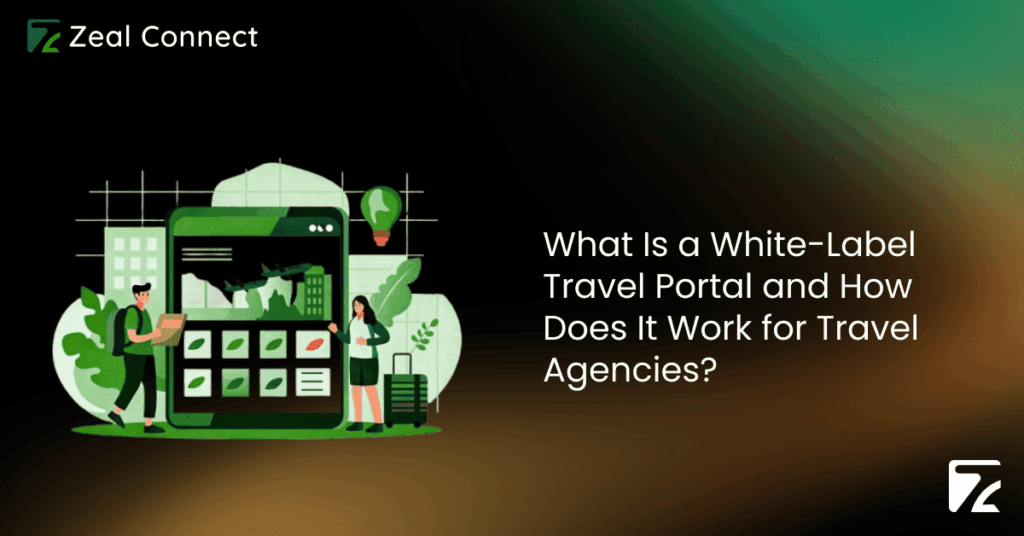
What Is a White-Label Travel Portal and How Does It Work for Travel Agencies?
TL;DR Summary This article explains what white-label travel portals are, how they work, and whether they’re right for your travel agency. You’ll discover the two main revenue models, typical commission rates backed by industry data, implementation costs, and when to choose white label over custom development. Perfect for travel agency owners, managers, and anyone exploring digital transformation in 2026. Why White-Label Travel Portals Are Critical for Travel Agencies in 2026 The online travel market reached $566.74 billion in 2024 and is projected to hit $1.37 trillion by 2033, growing at 9.85% annually according to Research and Markets. Here’s the challenge facing traditional travel agencies: over 80% of all travel bookings now happen online, yet many agencies still rely on phone calls, email confirmations, and manual processing. Your customers have fundamentally changed. Modern travelers, especially Gen Z and millennials, expect to browse inventory, compare prices, and book instantly on their smartphones at any hour. They won’t wait for office hours or manual confirmations when major OTAs offer real-time booking experiences. The economics are equally challenging. OTAs like Booking.com charge suppliers 15-30% commission per booking, while traditional travel agents typically earn just 10-15% on hotel bookings. The math simply doesn’t work unless you can compete on technology, speed, and inventory access. White-label travel portals solve exactly this problem giving independent agencies the same technical capabilities as major OTAs, without the massive development costs that can exceed $50,000-$150,000 for custom solutions What Exactly Is a White-Label Travel Portal? A white-label travel portal is a pre-built, fully functional online booking platform that travel agencies can rebrand as their own, offering real-time access to flights, hotels, cars, tours, and other travel services through integrated APIs and supplier connections. Think of it like buying a turnkey business instead of building from scratch. According to Coaxsoft’s comprehensive guide, a white-label provider has already developed the booking engine technology, negotiated supplier contracts with airlines and hotels, built the payment processing infrastructure, created the admin dashboard for managing bookings, and established customer support systems. Your agency simply adds your branding logo, colors, domain name and starts selling. From your customer’s perspective, they’re booking through your website. They never see the technology provider’s name. This model allows agencies to launch sophisticated booking platforms in 4-8 weeks instead of the 12-24 months required for custom development. The key difference from simply using an OTA is brand ownership and revenue control. When customers book on Booking.com or Expedia, those platforms own the customer relationship, the data, and set the pricing. With a white-label portal, you own the customer data, control pricing and profit margins, and build brand equity with every transaction. How White-Label Travel Portals Actually Work Real-Time Inventory Through API Integrations Modern white-label travel portals connect to Global Distribution Systems (GDS) like Amadeus, Sabre, and Travelport, plus direct supplier APIs. Here’s what happens when a customer searches for a flight on your branded portal: The customer enters search criteria (destination, dates, passengers), your portal sends API requests to multiple sources simultaneously, the system receives real-time availability and pricing from airlines, results display within 2-3 seconds with current fares, and the customer selects and books with instant confirmation. The entire process is automated with no phone calls to airlines, no manual checking of availability, and no waiting for quotes. The B2B travel platform market, valued at $2.17 billion in 2024, is projected to reach $4.8 billion by 2034 specifically because of these automation capabilities that eliminate manual processing bottlenecks. Professional white-label portals aggregate multiple travel services including flights with access to 500+ airlines through GDS and low-cost carrier APIs, hotels with over 1 million properties worldwide through suppliers like Expedia Partner Solutions and bedbanks, car rentals from major brands like Hertz and Avis plus local providers, tours and activities numbering over 150,000 experiences globally, airport transfers including shuttles and private cars, and instant-quote travel insurance. Each category connects through standardized APIs that update inventory every few minutes, ensuring customers see accurate availability and pricing . White-Label Travel Portal Business Models: Commission vs. Wholesale Understanding these revenue models is critical because they determine your profit potential and pricing flexibility. The Retail Commission Model for White-Label Travel Portals How it works: You earn a fixed commission percentage on each booking, with the supplier setting the customer-facing price. Typical commission rates based on 2025 industry data: Hotels: 10-15% of room rate (excluding taxes) Flights (domestic): 0-5% (many airlines pay zero commission) Flights (international): 10-22% depending on route Tours & activities: 20-30% commission Car rentals: 8-10% standard rate Cruises: 10-20% of total cruise fare (highest in travel) Example calculation: A customer books a $1,200 hotel package through your white-label portal. Your agency earns 12% commission average = $144. The customer pays $1,200 regardless your commission is paid by the supplier. Pros: Zero upfront inventory investment, no price risk if rates change, simple accounting, and good for agencies just starting digital booking. Cons: Can’t adjust prices or create special offers, margins are fixed by suppliers, difficult to differentiate from competitors, and lower overall profit potential. The Wholesale/Net Rate Model for White-Label Travel Portals How it works: Your agency purchases inventory at wholesale (net) rates, then sets your own retail prices. The difference is your profit. Typical wholesale discounts (2025 data): Hotels: 15-30% below retail rates Multi-day tour packages: 20-35% below retail Activities: 25-40% wholesale pricing available Example calculation: Hotel net rate is $850. You sell it to your customer for $1,100 through your white-label travel portal. Your gross profit is $250 (29% margin) nearly double what you’d earn on commission alone. Pros: Control over pricing and margins, ability to create packages and bundles, flexibility for promotions and discounts, much higher profit potential, and competitive advantages through pricing strategy. Cons: Requires upfront inventory commitments for some suppliers, price risk if you’ve pre-purchased inventory, more complex financial management, and usually requires minimum volume commitments. Key insight: OTAs charge hotels 15-30% commission, while traditional travel agents earn just 10-15%. The wholesale model lets you access OTA-level margins while maintaining your independent agency brand. White-Label Travel Portal Implementation Costs and ROI One of the biggest questions agencies ask is: “Can we afford this?” Here’s a transparent breakdown based on current market pricing from white-label travel portal providers. Initial Setup Costs (One-Time) Basic white-label travel portal: $5,000-$15,000 Includes standard branding with logo and colors, basic customization, and essential integrations like 1-2 GDS connections and payment gateway. Mid-range white-label travel portal: $15,000-$25,000 Features custom design and UX, multiple API